“How can we not be enraptured by the beauty that is already around us?”
Naomi Klein
We had just spent a few days on the Kenyan coast and on a safari into Tsavo East and West. On our drive back to Mokowe – a small town facing Lamu on the mainland of Kenya, a friend forwarded us one of the latest episodes of a NY Times podcast saying it reminded her of the aims of our podcast. The guests on the show were Naomi Klein and Astra Taylor, there to discuss their new book – End Times Fascism: And the Fight for the Living World.
I have not yet read the book (am planning to), but as we passed a changing landscape- the tropical palms of Mariakani swayed under greying skies, salt plains outside Malindi glowered in the sun, the caked mud huts of Witu began leaking red rivers in the sudden torrential downpour, and I listened to their discussion with David Marchese on The Interview. Klein and Taylor argue that there is an opportunity for a new kind of “pro-life” politics rooted in respect for human life, our shared existence, and the earth we must protect.
Access to nature is increasingly becoming a luxury for those who live in urban centres, overpopulation in many cities are draining our resources, contributing to all types of pollution; with capitalism drawing us like moths to the bright lights of the market, hoping to make a quick buck to sustain our endless consumerism or simply survive, but also to build a safety net for those of us in societies which used to rely on solid social fabrics for old age. Our attention spans have been drastically shortened to the latest flying car or dueling robots before we swipe left to picture ourselves on a Hawaiian beach with an acai bowl in our hands – wellness and mindfulness industries the big compromise to aid our societal anxiety.
The experience of most safaris today, coming from the Arabic verb safar (meaning to journey) and its evolution into Swahili safari, is one of luxury and privilege. The history of the safari in Kenya itself was at times bloodied and brutal. When British colonial rule built the Kenya – Uganda railway in the late 1890s, right next to Tsavo West, the golden age of Big-Game Hunting started. The industry grew into a massive revenue stream for the regional economy but often displaced local communities from ancestral lands and over-hunting threatened wildlife populations. Kenya and many of its neighbours, then shifted from trophy hunting to photography, establishing protected parks and reserves, such as Tsavo and the more well-known Maasai Mara.
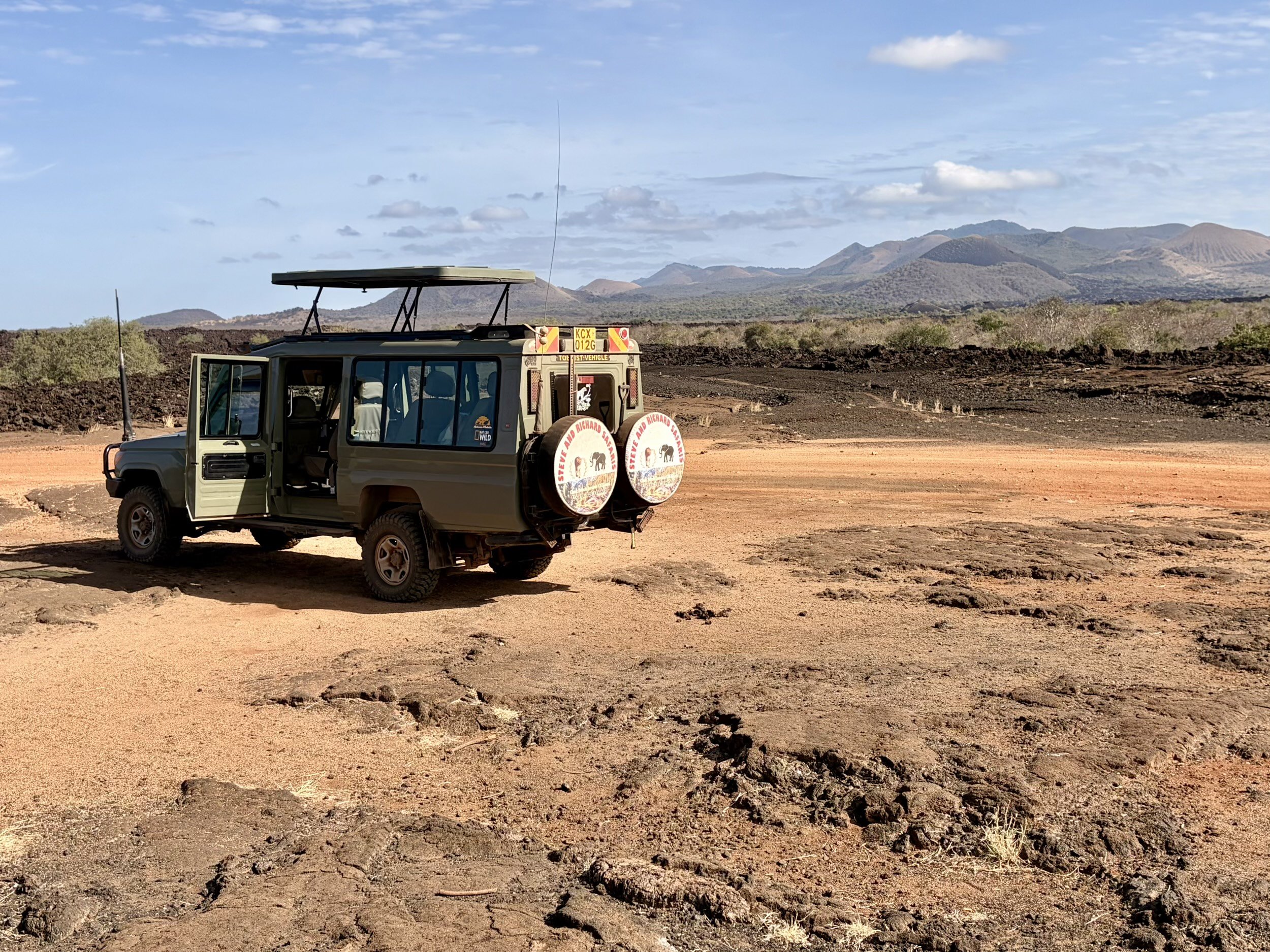
I had been on safari once before in 2009 and saw this as an opportunity to spend a sizeable chunk of our “special adventures” budget for the children to experience it for themselves. We entered Tsavo East through Sala Gate, the wide dusty red plains cupping the Galana river as it meanders its way through crocodiles and hippos. Max and Mattia ease into being wildlife spotters with the expert guidance of our driver Solomon and soon we are discovering Gerenuks, Impalas, Hartebeests, Oryx, Dikdik and everything in the Gazelle family. We bump our way along rocks, rust powder and elephant dung (crucial for spotting!) covering only a fraction of the immense 13,747 square kilometres of the reserve.
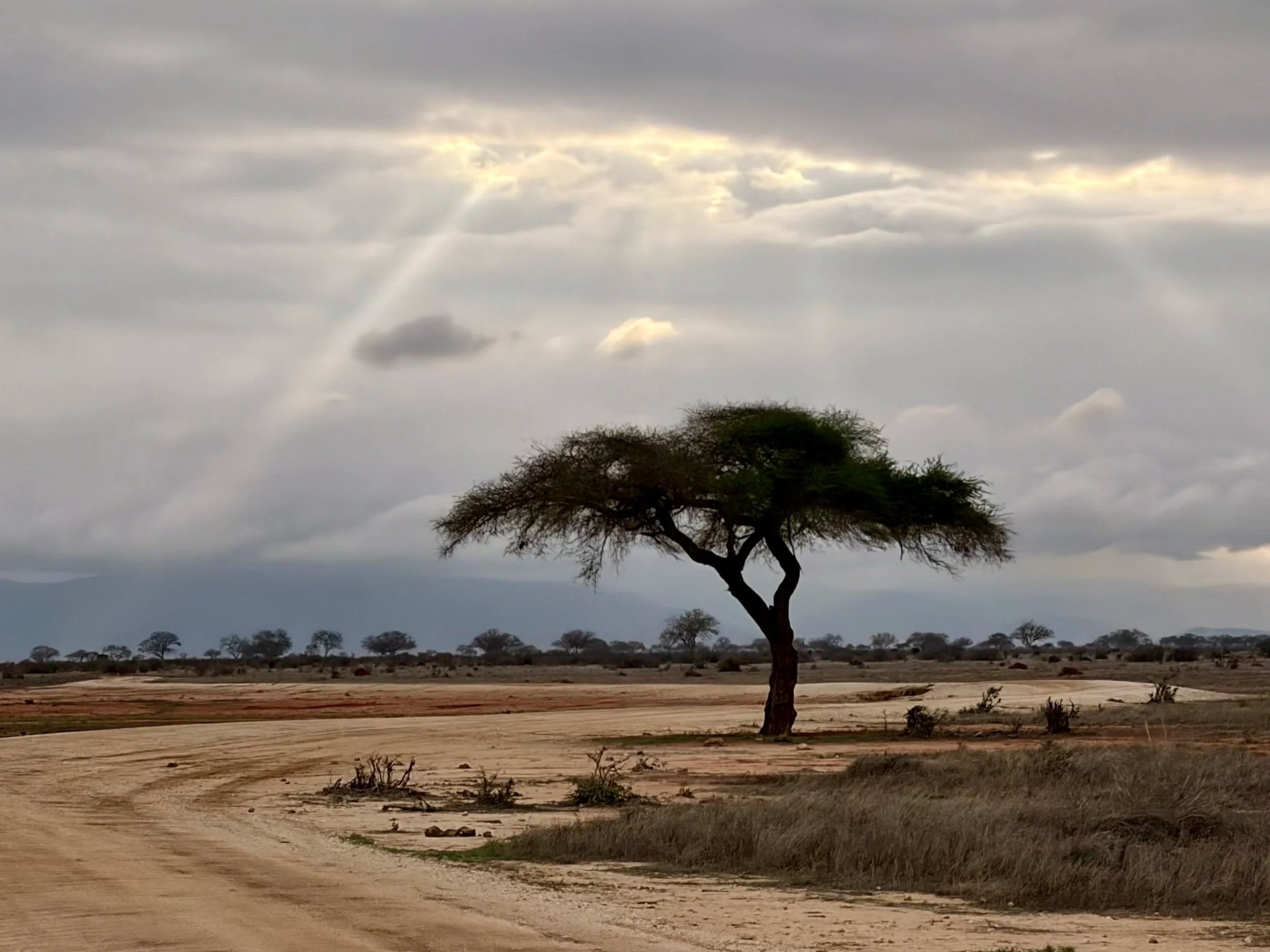
Nothing quite prepares you for the light of these plains. A blue-hued golden grey glow pierces through the tall savannah grass, angel rays fall through the clouds, tumbling over each other as they ride the breeze, creating wheat-coloured waves. Through it, we see giraffes nibbling at acacia tops, baby zebras running after their mothers, a lion pride chilling in the shade of trees after a good hunt, their bodies almost invisible, blending into the same hue as the grass.
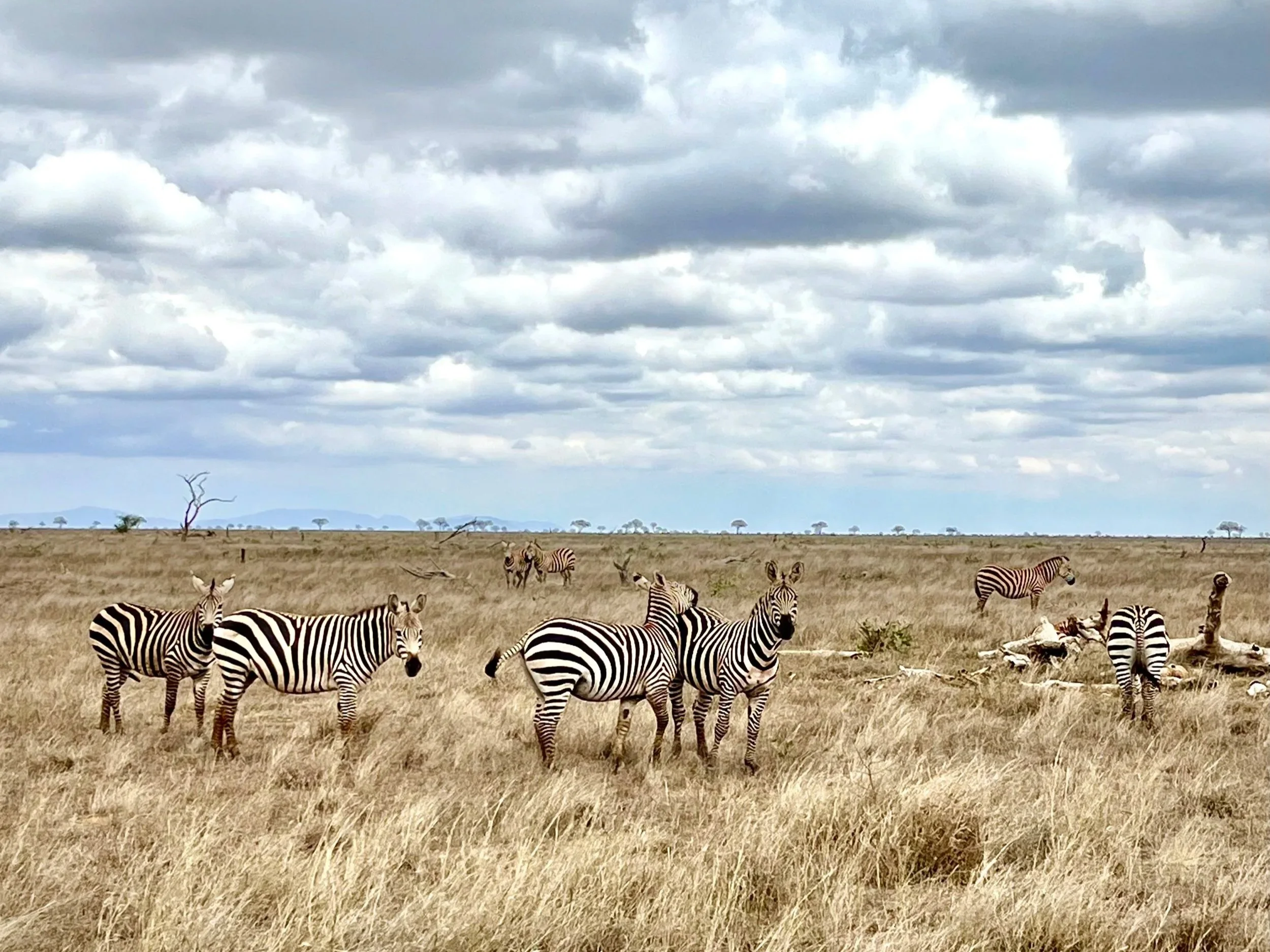
The children’s eager heads pop out of the roof of our car as they stand, their small fingers grasping the metal frame of the car. They point out every Termite hill, black and white Ostrich and blue-speckled Guinea Fowl. We spot a black-backed Jackal, a hard-to-find Serval Cat, tall Secretary Birds and then, their first Elephant. Walking alone, its feet thumping gently onto the terra-cotta earth. One-two, one-two, ear flap. There is a beat to an Elephant’s dance, their majestic movements somehow large yet soft and controlled, reminiscent of a wise person practicing tai-chi; except moving forwards rather than centered side to side. One by one, we begin to see solitary male elephants against the horizon – they usually leave their maternal family herds at around 12 to 15 years of age in a critical transition called musth.
“I belong to an industrialized, technologically organized society so divorced from nature that it’s harder and harder to feel instinctive connection with animals. It’s as if the scientific approach is all that matters, even if science may eventually tell us what our hunter-gatherer forebears knew before we created organizing hierarchies; that elephants are more than biological automata.”
Sophy Roberts – A Training School for Elephants
Suddenly, Max shouts, “Elephant!” Solomon hits the brakes, we had just entered Tsavo West where the bush and trees are taller and it is harder to spot animals. We could not see well, and then, there she was. She stared straight at us and as she side-stepped we saw two small calves behind her, this was a Mama Elephant. She shook her head slightly, her massive ears flaring, and her trunk vibrated. She fixated her gaze, daring us to suggest we would bring any harm to her babies. My heart raced and Solomon kept the engine running and gear in neutral as she came closer. In that moment, I felt an instinctive connection with this creature that was who knows how many times my size, a mother protecting her babies. We retreated downhill slowly to give them space and she lifted her trunk menacingly as they gathered the courage to cross the path we had just driven through. The babies hesistatingly looked at us then ran across following in her footsteps. She gave us one last intimidating glance and disappeared into the bush.
I let out a breath, not realising that I had been holding it back. Tears blurred my vision. How can we not be enraptured by this beauty, how can we not be driven to protect that which already exists on our earth, how can we not relate, mother to mother?
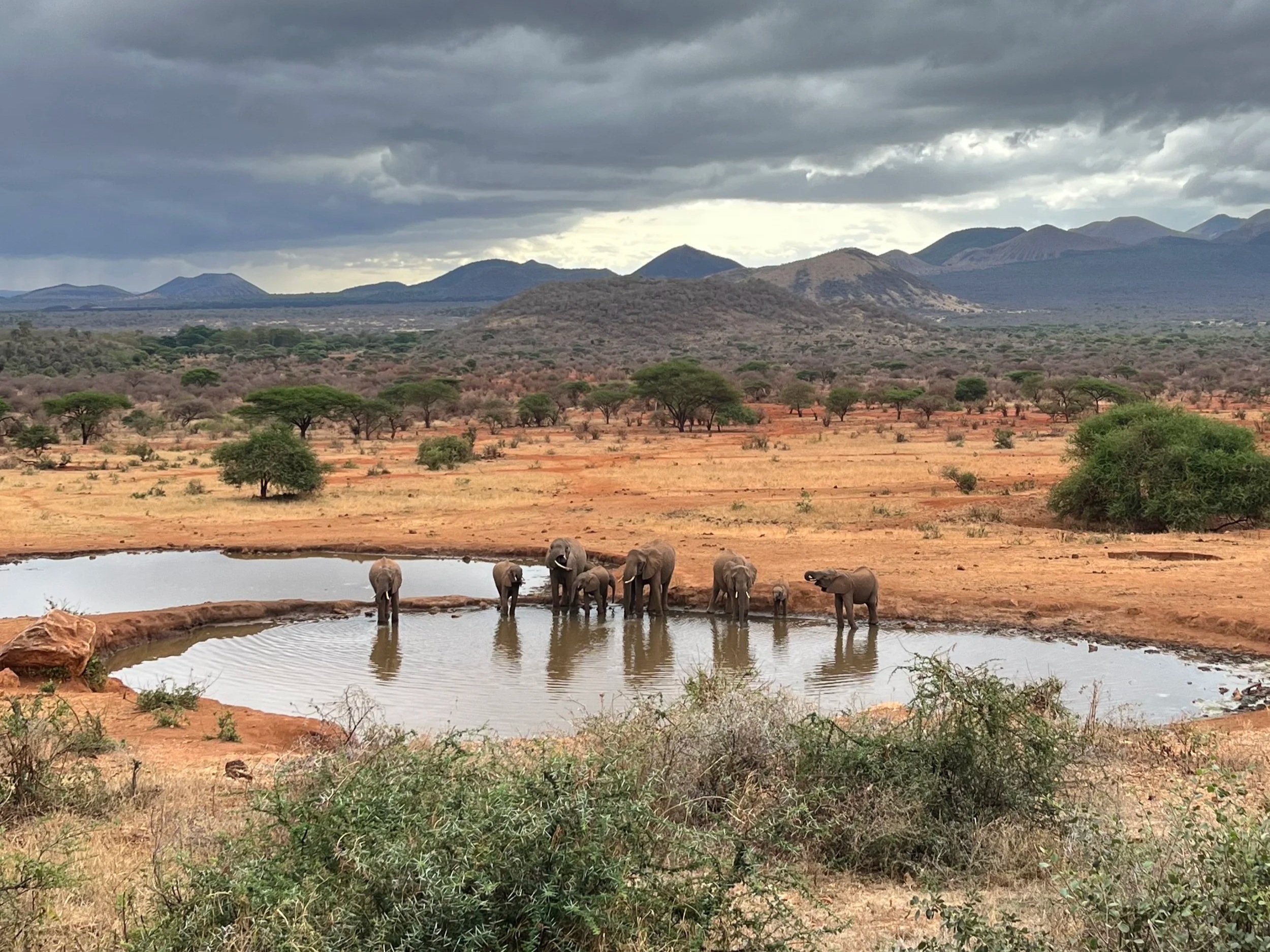
Elephants at watering hole in Tsavo West with the Chyulu Hills
Back outside our camp room, a group of mongoose stand up on their two hind feet, the littlest ones scattering quickly to the safety of their mother as we near; and a massive white owl engages in a staring contest with us, unmoving, goading us into blinking first. Vultures inspect the land from above and the biggest marabou (one of the Ugly Five) I’ve ever seen perches next to a watering hole where hyenas, buffaloes and elephants congregate to drink their litres of water for the day.
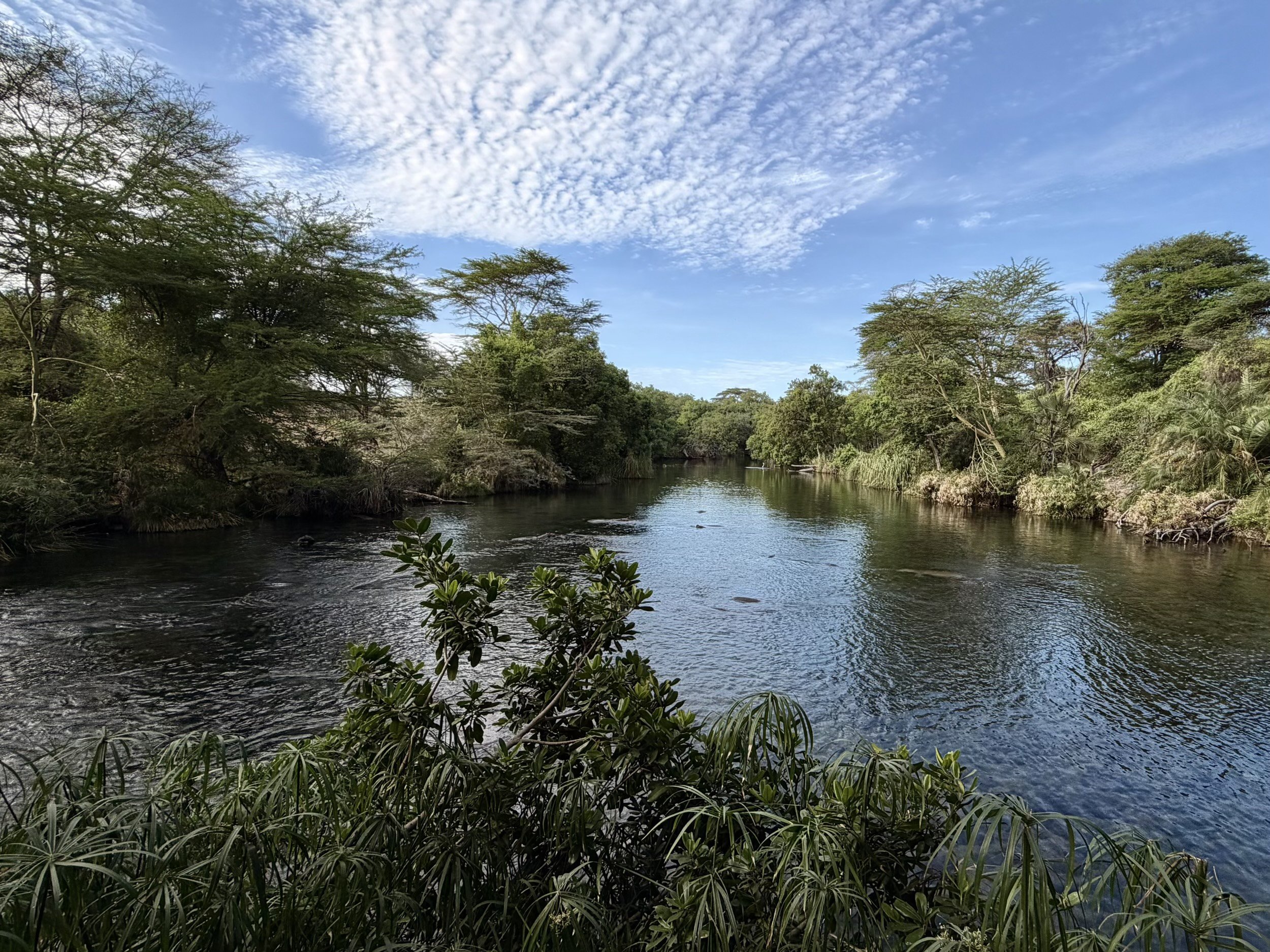
Mzima Springs, Tsavo West
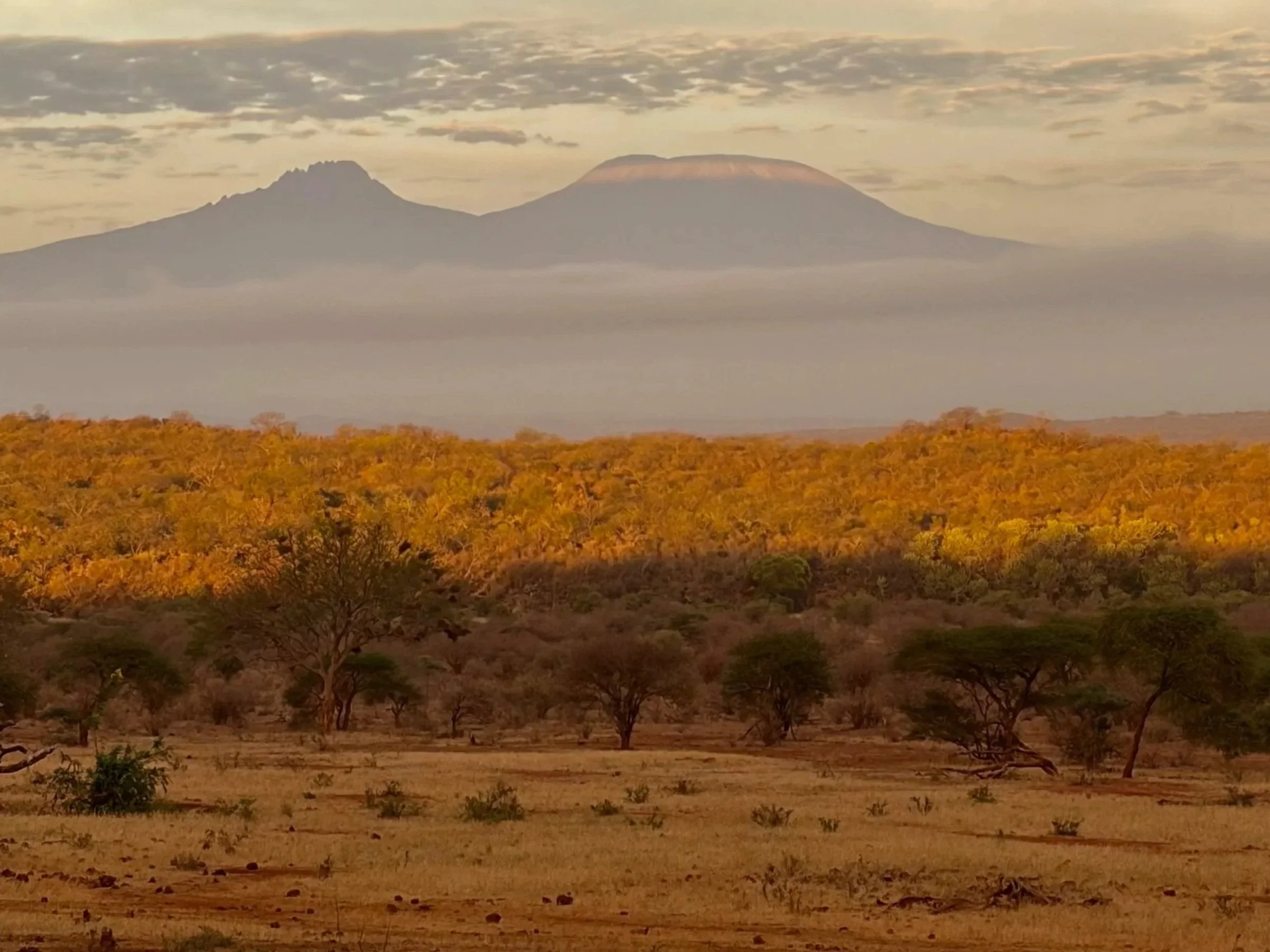
We wake early in the morning to go visit the Hippos and Crocodiles of Mzima Springs. We are greeted with a view of Kilimanjaro on one side and the Chyulu Hills on the other. The vastness of this territory, its never-ending horizon of blues, reds, greens and grey are enough to make you believe in the deep energy and power of the world again. The Chyulu Hills were created when volcanic lava erupted and flowed for long distances, creating the nearby Shetani Lava Flow, meaning Devil’s Lava Flow. Rain water is filtered through this otherworldy black lunar landscape producing crystal clear water 50 kilometres away in the Mzima Springs and supplying a significant portion of fresh water to the coast.
Here bamboo shoots out of the water, Crocodiles bask at the edge of the pools, and a baby Hippo plays with its mother. Opening and closing their mouths gently in mock fights, this open-mouth wrestling teaches them coordination, strength and helps to build social skills. A baby hippo makes even the most dangerous land mammal in Africa look incredibly cute.
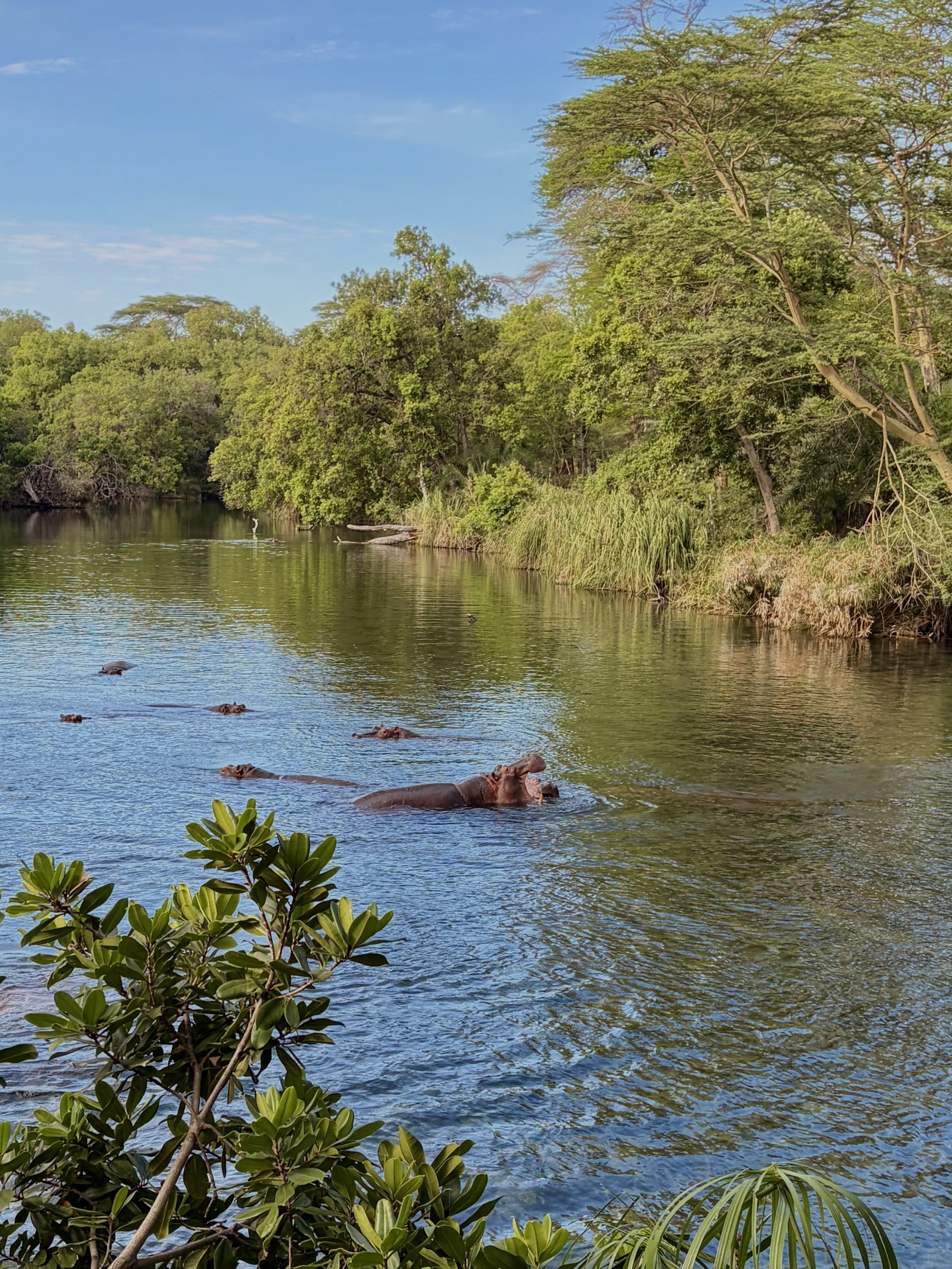
Hippos playing at Mzima Springs, Tsavo West
We eventually leave Tsavo through the Mtito Andei Gate and find ourselves on the Nairobi-Mombasa highway, a two-track road that runs parallel to the Mandaraka Express railway built by the Chinese and the old Kenya-Uganda railway built by Indian labourers brought over by the British. It is a nail-biting journey with endless container trucks overtaking one another and dusty towns blistering in the direct sun. We pass a big sign by a bridge saying “Man-eating Lions” commemorating the dozens of Indian railway construction workers killed by a pair of male lions in 1898. The Yatta plateau juts out of the ground, accompaniying us for most of the ride, the longest lava flow on Earth, stretching out for 290 kilometres. As I rearrange my limbs to find a comfortable position and reflect on all that we have seen, all the encounters of the past few days -
How can we not be in awe? How can we selfishly forget to share this beauty with the children of our children and theirs? That we are a part of it?
If tech oligarchs are striving to make our world unlivable and their apocalyptic worldviews casting dark shadows on any hope we have of reconnecting with ourselves, each other and nature, then I say get lost in nature for a moment. The incredible privilege we have to breathe in fresh air created by a tree, to drink water from a purified spring, to feel a flower petal between our fingers and to witness an Elephant walk this land and look us in the eyes.
Ultimately, we all want to feel safe and so do all the beings around us.
Safari Njema, Safe Travels